 +94 70 397 4746
 Premium Ceylon Spices
 info@jayabimaspices.com

What Is White Pepper? A Guide to Its Flavor, Uses, and Origins
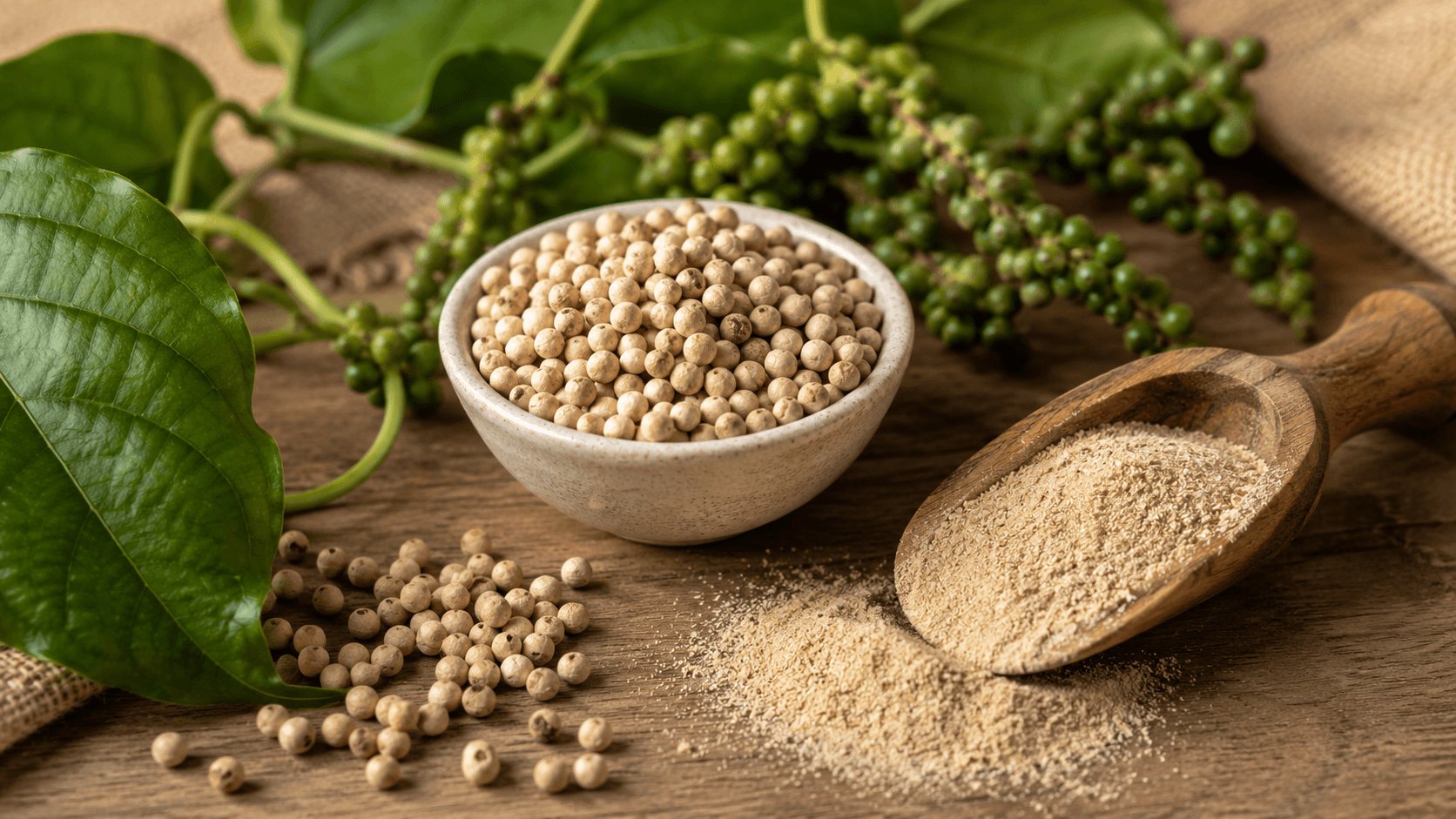
White pepper comes from the same vine as black pepper, Piper nigrum, yet it carries a milder heat, a smoother finish, and a pale colour that disappears into light sauces and soups. At Jayabima Spices, we grow and process this spice on the same fertile Sri Lankan estates that have supplied the world's kitchens with Ceylon pepper for generations.
How White Pepper Is Made
White pepper is the ripe seed of the Piper nigrum vine, harvested later than black pepper and soaked in water until the outer skin loosens and can be rubbed away. What remains is a pale, smooth inner seed, dried and either sold whole or ground into ground white pepper. Because the outer husk is removed, the spice has a cleaner appearance and a flavour that is often described as earthier and less fruity than its black counterpart.
White Pepper vs Black Pepper
Black pepper and white pepper begin as the same berry on the same Piper nigrum vine, so the difference comes down to timing and processing rather than a different plant. Black peppercorns are picked while still green and dried whole, skin intact, which gives them their dark colour and a bright, slightly citrusy heat. White pepper is picked riper and has its skin removed before drying, producing a subtler, more concentrated warmth without the sharper top notes of its darker relative.
A Quieter, Rounder Heat
The soaking stage that separates this spice from its black-skinned relative also gives it a distinctive, slightly fermented aroma alongside a warm, woody heat. Where black pepper opens with a sharp, citrusy top note, white pepper builds more slowly and lingers, with an earthy depth that some describe as musty in the best sense. This quieter character makes it useful in delicate dishes where a coarser black peppercorn would feel out of place.
Cooking with White Pepper
Ground white pepper is a staple across Southeast Asian and Chinese kitchens, where it seasons stir fries, hot and sour soup, dumplings, and marinades without darkening the dish. Beyond stir fries, this spice works well in white sauces, seafood dishes, potato salads, and dry rubs for poultry and pork. A little goes a long way, so start with a small pinch and adjust to taste before a dish reaches the table.
Buying and Storing
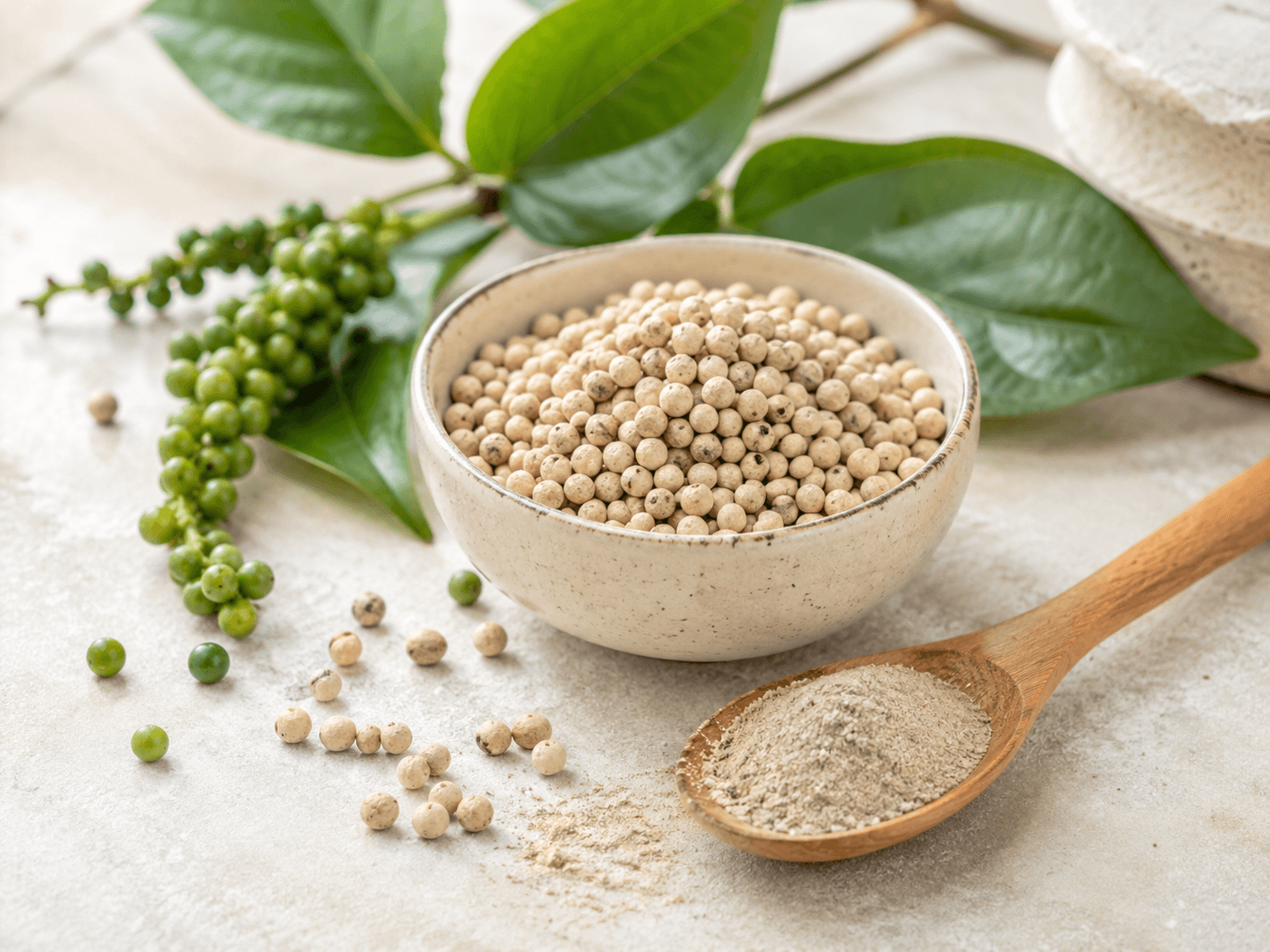
For the fullest flavour, buy whole white peppercorns and grind them fresh just before use, since pre-ground white pepper loses its aroma faster once exposed to air. Keep peppercorns or the ground spice in an airtight container, away from direct light and heat, and they will hold their character for well over a year. When shopping for quality, look for peppercorns that are uniformly pale, free of dust, and sourced from growers who can trace the product back to a specific farm or estate.
Traditional Benefits
Like black pepper, white pepper contains piperine, the compound responsible for pepper's heat and much of its studied digestive and antioxidant activity. Traditional Ayurvedic and Chinese medicine have long used pepper to support digestion and circulation, and modern research continues to explore piperine's role in nutrient absorption. As with any spice, it is best enjoyed as part of a balanced diet rather than as a substitute for medical advice.
Common Questions
White pepper is not exactly hotter than black pepper, just different: its heat builds more slowly and sits deeper on the palate. In most recipes you can substitute black pepper, though the flavour and appearance will shift slightly. Whole peppercorns rarely spoil but do lose potency over time, while ground white pepper fades faster once its container is opened.
Jayabima Spices grows and processes white pepper on Sri Lanka's sun-kissed estates, where our farmers have refined the craft of turning Piper nigrum into premium peppercorns and ground white pepper for generations.
Talk to our team